RBSE Class 10 English Model Paper 2026-27 is useful practice resource for preparing for the RBSE Class 10 Board Examination 2027 then you should go through RBSE Class 10 English Model Paper 2026-27 Free PDF. This model paper is prepared and designed according to the RBSE Class 10 English syllabus and examination pattern.
This model paper includes questions form reading skills, writing skills, Grammar covering important topics from the NCERT text books First Flight and Footprints Without Feet. Students can download free PDF and practise them.
RBSE Class 10 English Model Question Paper
Session -2026-27
Subject – English
Class -10
Time – 3Hours 15 Minutes Maximum Marks-80
General Instruction to the Examinees:
- Candidates must first write their Roll Nos. on the question paper compulsory.
- All the questions are compulsory.
- Write the answer to each question in the given answer book only.
- For questions having more than one part, the answers to those parts to be written together in continuity.
- Write the correct serial number of each question as mentioned in the question paper.
Section A
(Reading)
1.Read the following unseen passage carefully and answer the questions that follow.
Books have always played an important role in human life. They are as source of knowledge, imagination and inspiration. Reading helps us understand the world and develop our thinking ability. A good book can introduce us to different cultures, historical events, scientific discoveries and new ideas. It can also teach important values such as kindness, honesty, courage and patience.
In the present age, students have access to many sources of information. They can read books, newspapers, websites and digital articles. However, spending too much time on short online content may reduce their habit of reading longer texts. Reading a complete book requires attention and patience. It improves vocabulary, develops concentration and helps students express their thoughts more clearly.
Schools and parents can encourage children to read by providing interesting books and creating a regular reading routine. Even fifteen to twenty minutes of daily reading can make a difference. Students should choose books according to their interest such as stories, biography, science books or travel accounts.
Reading should not be considered only an academic activity. It can also be a source of pleasure and relaxation. A person who develops the habit of reading continues to learn throughout life.
Q1.What is the main idea of the passage?(1)
- Importance of sports
- Importance of reading
- Use of mobile phones
- School examinations
Q2.Reading helps us develop our(1)
- Thinking ability
- Physical strength
- Driving skills
- Sleeping habits
Q3.Which of the following values is mentioned in the passage? (1)
- Carelessness
- Dishonesty
- Patience
- Laziness
Q4.What may happen if students spend too much time on short online content? (1)
- Their reading habit may become weaker.
- They will learn every subject quickly.
- Their vocabulary will disappear.
- They will stop using books completely.
Q5.Reading a complete book requires: (1)
- Money and speed
- Attention and patience
- Physical strength
- Special equipment
Q6.How much daily reading time is suggested in the passage? (1)
- Five minutes
- Fifteen to twenty minutes
- Two hours
- Four hours
Q7.Which type of books is mentioned in the passage? (1)
- Biographies
- Account books
- Telephone directories
- Instruction manuals only
Q8.Who can encourage children to read? (1)
- Only shopkeepers
- Only friends
- School and parents
- Only neighbours
Q9.The word “inspiration” in the passage is closest in meaning to: (1)
- Discouragement
- Motivation
- Confusion
- Carelessness
Q10.Which word from the passage refers to a feeling of rest and relief?(1)
- Concentration
- Relaxation
- Discovery
- Patience
Read the following case-based passage and study the table carefully. Answer the questions that follow:
A school conducted a survey to understand how students travel to school. The survey included 200 students from Classes IX and X. The purpose was to identify common modes of transport and encourage students to adopt safe and environment- friendly travel habits.
The survey showed that 70 students came to school by bicycle, while 50 students walked. Another 45 students used the school bus. The remaining 35 students travelled by private vehicles such as cars and motorcycles.
The teachers discussed the results with students during a morning assembly. They explained that walking and cycling help students remain physically active and also reduce air pollution. The school decided to organise a road safety awareness programmed and encourage students to use bicycles whenever possible. It also planned to provide a separate bicycle parking area.
| Mode of Transport | Number of Students |
| Bicycle | 70 |
| Walking | 50 |
| School bus | 45 |
| Private vehicles | 35 |
| Total | 200 |
Answer the following questions:
Q11. How many students participated in the survey? (2)
Q12. Which mode of transport was used by the highest number of students? (2)
Q13. What information does the table provide? (2)
Q14.why did the teachers encourage walking and cycling? Give two reasons. (2)
Q15. Mention two steps planned by the school to promote safe and environment-friendly travel. (2)
Section B
(writing Skill)
Choose the correct determiner to complete the following sentences
Q16. …………………. students took part in the inter school science exhibition. (1)
- Much
- Many
- Little
- any
Q17. There is ……………water left in the bottle; it is almost empty. (1)
- many
- few
- little
- several
Choose the correct form of the verb.
Q18. The sun ………………….in the east. (1)
- rise
- rises
- rising
- risen
Q19. By the time we reached the station, the train…………(1)
- leaves
- has left
- had left
- will leave
Choose the correct option
Q20. Neither Rohan nor his friends……………. present in the classroom. (1)
- was
- were
- is
- has
Q21. Each of the students ……………. responsible for completing the project. (1)
- are
- were
- is
- have
Change the following sentence from direct to indirect speech.
Q22. The teacher said to the students,” Keep the classroom clean”.(2)
Section B
Q23. You are Rohan/Ritika, a student of Government Senior Secondary School, Jodhpur. Write a letter to the principal requesting permission to organize a tree- plantation program me in your school. Mention the importance of trees and explain how students will participate. (100-120 words) (1+2+1=4)
Or
Write an application to your principal requesting three days’ leave to attend your elder sister’s marriage +2+1=4)
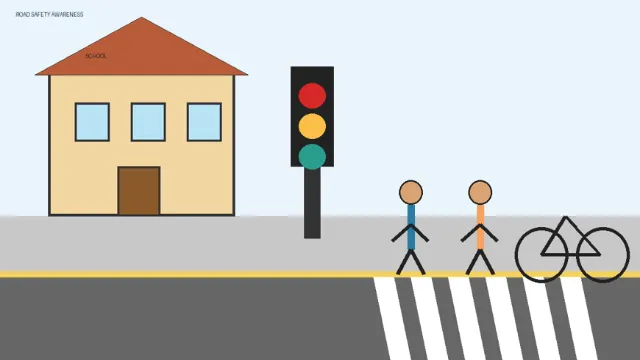
Q24. Write a paragraph in about 100 -120 words om any One of the following. Also give a suitable title. (1+2+1=4)
Hints
Follow traffic signals and road signs
Use zebra crossing and footpaths
Wear helmets and seat belts
Avoid using mobile phones while driving or crossing
Respect pedestrians and cyclists
Road safety protects every life
Or
Write a paragraph in about 100-120 words with the help of the following hints.
The importance of saving water
Water is essential for all living beings
Fresh water is limited
Wastage through leaking taps and careless use
Rainwater harvesting and reuse of water
Close taps and use water carefully
Every drop counts
Q25. Develop a meaningful story in 80-100 words with the help of the following outline. Give a suitable title and mention the moral of the story. (1+2+1=4)
A thirst crow……..finds a narrow-necked pot- a little water at the bottom-cannot reach it- thinking of an idea-drops small stones into the pot-water rises-drinks water-files away.
Or
A student finds a wallet near the school gate- wallet contains money and an identity card- feels tempted- remembers parents’ advice-finds the owner’s address- returns the wallet-owner blesses the student-honesty is rewarded.
Section C
(Language Through Literature)
Q26. Read the following extracts carefully and answer the questions that follow. (1+2+1=4)
“ The house- the only one is the entire valley- sat on the crest of a low hill. From this height one could see the river and the field of ripe corn dotted with the flowers that always promised a good harvest.”
- Where was Lencho’s house situated? (1)
- What could be seen from the height of the house? (2)
- What did the flowers in the field promise? (1)
Or
“ I was not born with a hunger to be free. I was born free- free in every way that I could know. Free to run in the fields near my mother’s hut, free to swim in the clear stream that ran though my village, free to roast mealies under the stars and ride the broad backs of slow-moving bulls. As long as I obeyed my father and abided by the custom of my tribe, I was not troubled by the laws of man or God.”
- Who is the speaker of these lines? (1)
- Mention two freedoms Mandela enjoyed during his childhood. (2)
- What did Mandela have to do to remain free in is childhood? (1)
Q27. Read the following extract carefully and answer the questions that follow:
The way a crow
Shook down on me
The dust of snow
From a hemlock tree
Questions
- Which bird and tree are mentioned in the above lines?(2)
- What did the crow shake down?(1)
Or
“Some say the world will end in fire,
Some say in ice.
From what I’ have tasted of desire
I hold with those who favour fire.”
Questions
- What are the two things that some people believe will end the world? (2)
- Which option does the poet favour? (1)
Answer the following questions in approximately 30-40 words each. (First Flight)
Q28. What values and experience shaped Nelson Mandela’s understanding of freedom? ((Nelson Mandela: Long Walk to Freedom) (3)
Q29. How does the poet shoe the contrast between a tiger’s life in the zoo and its life in the forest? (A Tiger in the Zoo) (3)
Q30. What details about the tea gardens of Assam impressed Rajvir during his journey? (Glimpses of India- Tea of Assam) (3)
Q31. Why does the poet in ‘The Trees’ describe the trees as moving out into the forest? (3)
Q32.What makes the argument between the characters in ‘The Proposal’ humorous? Give two points. (The Proposal) (3)
Answer any one of the following questions in approximately 100-150 words. (First Flight)
Q33. How did Valli plan and manage her first but journey? Describe her preparations, observation and feelings during the journey.(Madam Rides the Bus)(6)
Or
What did Gautama Buddha teach Kisa Gotami about life and death? How did his lesson help her understand the truth of human existence? (The Sermon at Benares) (6)
Answer any one of the following questions in approximately 30-40 words. (Footprints Without Feet)
Q34. Why did Dr Herriot suggest that Tricki should be hospitalised? What treatment did he give him? (A Triumph of Surgery) (3)
Q35. Why did Hari Singh return to Anil after stealing the money? What change had taken place in his thinking? (The thief’s Story) (3)
Answer any one of the following questions in approximately 100-150 words. ( Footprints Without Feet)
Q36. How did Ausable use this presence of mind to get rid of Max? describe the events that show his intelligence and cleverness.(The Midnight Visitor)(6)
Or
How did Horace Danby plan the robbery at Shotover Grange? How did the young woman deceive him?(A Question of Trust)(6)